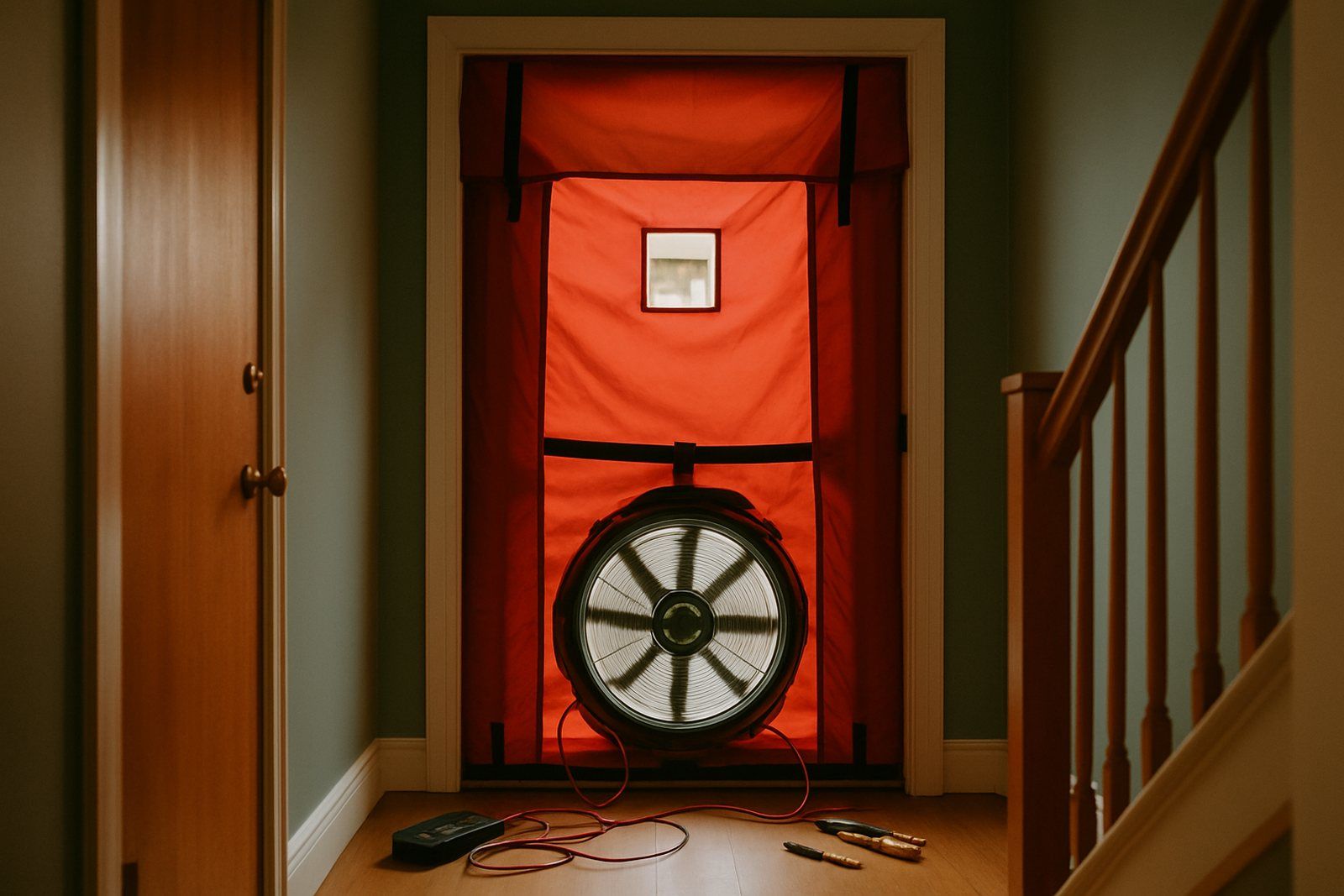
Audits & planning
Home Energy Audit: What It Includes, Cost and How to Get One
What a home energy audit includes, what it costs, how to find a BPI or RESNET certified pro, free utility audits, and a DIY checklist you can do today.
Topics
Short answer
To lower your energy bill, start with heating, cooling and water heating, which use most of a home's energy. Free steps like thermostat setbacks and a 120°F water heater setting come first, then low-cost fixes like LEDs and air sealing, then bigger upgrades like insulation and a heat pump. A home energy audit shows which upgrades pay off.

If you want to know how to lower your energy bill, start where the money goes. In most U.S. homes, heating, cooling and hot water use far more energy than lights or gadgets, so small changes there pay off fastest. This guide ranks the options from free habit changes to low-cost fixes to big upgrades, using savings figures from the U.S. Department of Energy (DOE), ENERGY STAR and the U.S. Energy Information Administration (EIA), and links to our detailed guides on each topic.
Heating and cooling are the largest share. EIA found that space heating and cooling made up 52% of household energy use, and water heating, lighting and refrigeration together made up another 25% (EIA, survey data for 2020). That means most of your savings will come from the heating and cooling system, the building around it and the water heater.
Source: U.S. EIA, Residential Energy Consumption Survey 2020 (as of December 18, 2023).
| End use | Share of home energy use |
|---|---|
| Heating and air conditioning | 52% |
| Water heating, lighting, refrigeration | 25% |
| Other devices | 23% |
ENERGY STAR puts heating and cooling at almost half of the average household’s annual energy bill, or more than $900 a year. DOE says water heating is typically the second largest energy expense, at about 18% of a home’s energy use.
To get a feel for electricity costs, EIA reports that the average U.S. residential customer used about 899 kilowatt-hours (kWh) a month (EIA, data for 2022). The average U.S. residential electricity price was about 18.3 cents per kWh in July 2026, up from about 17.5 cents a year earlier (EIA, preliminary data). At those averages, a typical household would pay roughly $160 a month for electricity alone. Your own bill depends heavily on your state, your heating fuel and your home.
Source: U.S. EIA (FAQ 97; Electric Power Monthly Table 5.6.A); U.S. DOE Energy Saver (as of July 2026).
The best order is free habits first, then low-cost fixes that pay back within a year or two, then larger upgrades guided by a home energy audit. The table below ranks common options by cost and the savings official sources report. Savings are not additive: each fix lowers the base the next one works on.
| Rank | Action | Up-front cost | Reported savings (source) |
|---|---|---|---|
| 1 | Thermostat setback of 7°F to 10°F for 8 hours a day | Free | Up to 10% a year on heating and cooling (DOE) |
| 2 | Water heater set to 120°F | Free | A setting DOE calls safe for most people |
| 3 | Wash laundry in cold water, full loads | Free | Heating water is about 90% of a washer’s energy use (ENERGY STAR) |
| 4 | Clean the dryer lint trap every load | Free | Up to $34 a year (ENERGY STAR) |
| 5 | Replace or clean HVAC filters | Low | Keeps the system from working harder (ENERGY STAR) |
| 6 | Switch to ENERGY STAR LED bulbs | Low | Up to 90% less energy than incandescent bulbs (DOE) |
| 7 | Advanced power strips for electronics | Low | Standby power could add 5% to 10% to a monthly bill (DOE) |
| 8 | Caulk, weatherstrip and seal air leaks | Low to moderate | 10% to 20% on heating and cooling (DOE) |
| 9 | Smart thermostat | Moderate | About 8% of heating and cooling, about $50 a year on average (ENERGY STAR) |
| 10 | Insulate the hot water tank and pipes | Low | 7% to 16% (tank) and 3% to 4% (pipes) on water heating (DOE) |
| 11 | Seal and insulate ducts | Moderate | Up to 20% better heating and cooling efficiency (ENERGY STAR) |
| 12 | Attic insulation plus air sealing | Moderate to high | Up to 10% on total annual energy bills (ENERGY STAR) |
| 13 | Heat pump water heater | High | Large cut in water heating energy (see our guide) |
| 14 | Heat pump for heating and cooling | High | Depends on current fuel and climate (see our guide) |
| 15 | Replacement windows | High | Usually the slowest payback (see our guide) |
Source: U.S. DOE Energy Saver Guide; ENERGY STAR (as of October 18, 2026).
| Action | Reported savings on heating and cooling (up to) |
|---|---|
| Smart thermostat (average) | 8% |
| Thermostat setback 7–10°F | 10% |
| Seal air leaks | 20% |
| Equipment + envelope + settings | 30% |
The free steps target the biggest energy users: lower the heat and raise the cooling setting when you sleep or are away, set the water heater to 120°F, wash clothes in cold water, run full dishwasher loads and turn off what you are not using. These habits cost nothing and start saving on your next bill.
LED bulbs, a fresh HVAC filter, weatherstripping and caulk, advanced power strips, and insulation for the water heater and pipes cost little and usually pay back quickly. ENERGY STAR says replacing your five most-used bulbs or fixtures with ENERGY STAR lighting saves about $40 a year.
Lighting. DOE says an ENERGY STAR certified LED bulb uses up to 90% less energy than an old incandescent bulb, lasts 15 to 25 times longer, and can save about $55 in electricity over its lifetime. Start with the lights you use most.
Filters and maintenance. ENERGY STAR suggests checking your HVAC filter every month, especially in heavy-use seasons, and changing it at least every three months. A dirty filter makes the system work harder. A yearly professional tune-up keeps equipment running efficiently.
Air sealing. DOE says sealing uncontrolled air leaks can save 10% to 20% on heating and cooling bills. Caulk around window trim, weatherstrip doors, and add foam gaskets behind outlet covers on exterior walls. The bigger leaks are often hidden in the attic and basement. Our air sealing guide shows where to look and how to stay safe with fuel-burning appliances.
Smart thermostat. An ENERGY STAR certified smart thermostat saves about 8% of heating and cooling bills, or about $50 a year on average, and up to about $100 in homes that are empty much of the day. Read what smart thermostat savings look like in practice before you buy, especially if you have a heat pump.
Water heater and pipes. DOE says insulating a hot water tank that is warm to the touch can save 7% to 16% a year on water heating, and insulating hot water pipes can save another 3% to 4%. Follow the maker’s instructions, and keep insulation away from the burner and flue on gas models.
Electronics. DOE says devices that draw power when switched off could add 5% to 10% to a monthly utility bill. An advanced power strip cuts power to TVs, game consoles and computer accessories when they are not in use.
Yes, before spending on anything major. An audit measures where your home leaks air, how much insulation it has and how your equipment is performing, then ranks upgrades by value. DOE estimates a professional assessment costs about $250 to $600 or more, and many utilities offer them free or at a reduced price.
A professional audit typically includes a blower door test and an infrared scan, which together show leaks you cannot see. It also catches safety issues, such as gas appliances that may not vent well after air sealing. Our guide to getting a home energy audit explains what to ask and a do-it-yourself checklist if you want to start on your own.
The upgrades that usually pay off best are attic insulation with air sealing, duct sealing, and replacing old heating, cooling or water heating equipment with efficient models when it wears out. DOE says new efficient heating or cooling equipment alone can cut energy use by 20% or more, and combining it with insulation, air sealing and good thermostat settings can cut heating and cooling bills by about 30%.
Insulation and air sealing make every later upgrade work better. A tighter, better-insulated home may need a smaller, cheaper heating and cooling system. ENERGY STAR estimates sealing and insulating can save up to 10% on annual energy bills. Our attic insulation guide lists recommended R-values by climate zone and compares materials.
ENERGY STAR also estimates that about 20% to 30% of the air moving through a typical duct system is lost through leaks and poor connections. Sealing ducts with mastic or metal tape, not cloth duct tape, can improve system efficiency by as much as 20%.
Heating and cooling equipment that is old or failing is a big opportunity. ENERGY STAR suggests having systems older than 10 years evaluated by a professional, and notes that poor installation can reduce efficiency by up to 30%, so proper sizing and installation matter as much as the model you choose.
Federal tax credits for home energy upgrades ended for 2026 work, but utility rebates, state-run Home Energy Rebates in some states, and income-based help such as LIHEAP and the Weatherization Assistance Program are still available. Check each program’s current rules, because funds and eligibility change.
Federal tax credits. The Energy Efficient Home Improvement Credit (25C) does not apply to property placed in service after December 31, 2025, and the Residential Clean Energy Credit (25D) does not apply to expenditures made after that date. If you finished qualifying work in 2025, you may still claim it on your 2025 return. Our guide to energy tax credits in 2026 explains the details. This is not tax advice, so confirm with a tax professional.
State Home Energy Rebates. The federal Home Energy Rebates are run by states, and only some states have launched programs, according to the National Association of State Energy Officials (NASEO) tracker. Rules changed under DOE Program Notice 26-2, effective May 29, 2026. See home energy rebates by state for the current list.
Utility rebates. Many utilities offer rebates for smart thermostats, insulation, heat pumps and audits. Check your utility’s website and the ENERGY STAR Rebate Finder.
Bill help. The Low Income Home Energy Assistance Program (LIHEAP) helps eligible households pay heating and cooling bills, and it is funded for fiscal year 2026. The Weatherization Assistance Program provides free weatherization for income-eligible households. Our guide to help paying your energy bills explains how to apply, plus utility payment plans and shutoff protections.
Make a short, ordered plan: start the free habits this week, buy the low-cost fixes this month, schedule an audit before the next heating or cooling season, and set aside a budget for the one or two big upgrades the audit ranks highest. Track your bills to confirm savings.
The fastest way to lower your energy bill is to focus on heating, cooling and hot water, which use most of a home’s energy. Start with free changes such as thermostat setbacks, a 120°F water heater setting and cold-water laundry. Add low-cost fixes such as LEDs, filters and air sealing. Then let a home energy audit guide bigger upgrades like insulation, duct sealing and efficient heat pumps. Federal tax credits ended for 2026 work, so check your utility, your state’s rebate program and assistance programs for help.
Heating and cooling are the largest energy users in most homes. EIA found that space heating and cooling made up 52% of household energy use in its survey data for 2020, with water heating, lighting and refrigeration together making up another 25%. In an all-electric home, the heat pump or electric furnace and the water heater are usually the biggest electric loads. Your utility's online account may show hourly use that helps you spot your own biggest users.
Compare the kilowatt-hours used, not just the dollars. If your usage stayed flat, the rate went up, so check your utility's rate notices. If usage jumped, look at the weather that month, any new appliances, guests, a space heater, or equipment running constantly, such as a well pump or a stuck HVAC fan. A heat pump's backup heat running on mild days is a common culprit. If nothing explains it, ask your utility to check the meter reading.
Only in narrow cases. A space heater can save money if you heat one small room and turn the central heat down for the rest of the house. Running a space heater on top of normal central heating usually raises your bill, because electric-resistance heat is an expensive way to heat. Use only models with tip-over and overheat shut-off, plug them directly into a wall outlet, and keep them away from anything that can burn.
A little. Many devices draw power even when switched off, and DOE's Energy Saver guide says this standby power could add 5% to 10% to a monthly utility bill. You do not need to unplug everything. Put home entertainment and computer gear on an advanced power strip that cuts power when the devices are not in use, and unplug chargers once devices are full. Leave things that need constant power, such as routers and medical devices, plugged in.
It can be, if you can shift use away from peak hours. Under time-of-use rates, electricity costs more at busy times, often weekday late afternoons and evenings, and less at other times. Running the dishwasher, laundry and electric vehicle charging overnight or midday can lower your bill. If you cannot shift much use, a time-of-use rate may cost more. Use your utility's rate comparison tool, which many utilities offer, before switching.
Turning it up when you leave is usually cheaper. A warmer house gains heat from outdoors more slowly, so the system does less total work than if it held a cool temperature all day. DOE recommends setting the thermostat as high as is comfortable when you are home and raising it when you are asleep or away. A programmable or smart thermostat can start cooling shortly before you return, so you come home to a comfortable house without paying to cool an empty one.
It depends on your house, which is why an energy audit is worth doing first. In many older homes, air sealing and attic insulation give the best return for the money. If your furnace, air conditioner or water heater is near the end of its life, choosing an efficient replacement such as a heat pump or heat pump water heater can make a large difference. Windows are usually one of the slowest upgrades to pay back.
Yes. Renters control many of the biggest no-cost savings: thermostat settings, shorter showers, cold-water laundry, full dishwasher loads and LED bulbs. Removable weatherstripping, door sweeps and insulating window coverings are usually allowed, but check your lease. Ask your landlord about sealing drafts, servicing the heating system and upgrading old appliances. Renters can also qualify for LIHEAP and, with the landlord's permission, the Weatherization Assistance Program.
They can, if you use them to raise the thermostat. DOE says a ceiling fan lets you set the thermostat about 4°F higher with no loss in comfort, because moving air makes you feel cooler. Fans cool people, not rooms, so turn them off when you leave the room. Running a fan in an empty room only adds to your bill.
What a home energy audit includes, what it costs, how to find a BPI or RESNET certified pro, free utility audits, and a DIY checklist you can do today.
How much a smart thermostat saves, which settings matter, heat pump and C-wire compatibility, and how utility demand-response programs pay you.
Which states have launched federal Home Energy Rebates (HOMES and HEAR), what DOE Notice 26-2 changed in 2026, and how to apply in your state.